
Blog
How many Puffs is a RELX Pod

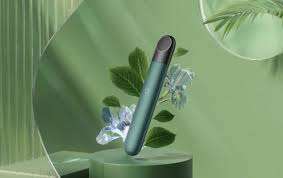
The question of how many puffs a RELX pod delivers is central to understanding both the value and the engineering of the brand’s closed-pod systems. While a straightforward number is often printed on packaging or marketing materials, the reality of puff count is dynamic, influenced heavily by user behavior, device mechanics, liquid composition, and the physical principles of vaporization.
To explore this topic thoroughly without relying on external website references or specific external marketing data, we must break down the mechanics of the RELX system, analyze the variables that dictate liquid consumption, and look at the mathematical and physical realities that determine how long a single pod lasts.
The Baseline Numbers and Pod Capacity
To understand puff counts, we first look at the volume of e-liquid contained within the pods. Over its product generations—ranging from the original RELX Classic to the Infinity, Essential, Phantom, and subsequent iterations—the capacity of a standard RELX pod has typically fluctuated between 1.9 milliliters and 2.0 milliliters.
In the vaping industry, a general rule of thumb for standard power-output devices (running at relatively low wattages between 6 to 11 watts) is that 1 milliliter of e-liquid yields roughly 250 to 300 short puffs.
Using this baseline calculation:
-
A 1.9 ml pod theoretically yields between 475 and 570 puffs.
-
A 2.0 ml pod theoretically yields between 500 and 600 puffs.
Many standard estimates place the average output at approximately 500 to 600 puffs per pod. For context, manufacturers often equate this capacity to roughly two to three packs of traditional cigarettes, assuming a traditional cigarette offers about 10 to 15 puffs.
However, these baseline numbers are generated using automated testing machines. In a laboratory setting, a mechanical pump draws on the pod under strictly controlled parameters: a precise puff duration (often exactly 1.5 or 2 seconds), a fixed inhalation pressure, and uniform intervals between puffs to prevent overheating. Human beings do not vape like machines, which is why actual user experiences vary wildly.
The Variables of Human Behavior
The most significant factor causing deviation from the standard 500-to-600 puff estimate is individual usage style. Because puff count is a measure of frequency rather than volume, the characteristics of each breath alter the lifespan of the pod.
1. Puff Duration
An electronic testing apparatus might take a 1.5-second sip, but a human user might take a deep, drawn-out pull lasting 3 to 4 seconds. If a user’s average puff duration is twice as long as the machine baseline, the total number of puffs obtained from a 2.0 ml pod will logically be cut by at least half, dropping the total yield to 250 or 300 puffs. Conversely, short, quick “stealth” puffs can extend the pod’s life well past the 600-puff mark.
2. Inhalation Intensity (Draw Strength)
RELX devices utilize pressure-sensitive air-flow switches to activate the heating element. A harder draw increases the velocity of the air moving through the pod. This alters the cooling rate of the coil and can cause the internal regulation system to adjust power or allow more liquid to feed into the ceramic wick. A forceful inhalation often aerosolizes more liquid per second than a gentle, steady draw, depleting the pod faster.
3. Chain Vaping and Thermal Accumulation
When a user takes multiple puffs in rapid succession, the internal heating element (ceramic block and embedded micro-coil) does not have sufficient time to cool down to ambient temperature. The residual heat accumulates in the ceramic matrix. Consequently, during the next immediate puff, the coil reaches vaporization temperature almost instantly, vaporizing a larger volume of e-liquid over the course of that puff compared to a draw started from a cold device. Continuous chain vaping increases liquid consumption per puff and reduces total puff count.
Technical Architecture and E-Liquid Dynamics
Beyond how a person vapes, the internal technology of the RELX pod itself governs how efficiently the liquid is converted to vapor.
+-------------------------------------------------------------+
|                      RELX Pod Structure                      |
+-------------------------------------------------------------+
|                                                             |
|   +-----------------------------------------------------+   |
|   |                     Mouthpiece                      |   |
|   +-----------------------------------------------------+   |
|                              |                              |
|   +-----------------------------------------------------+   |
|   |                  E-Liquid Reservoir                 |   |
|   |                    (1.9ml - 2.0ml)                  |   |
|   +-----------------------------------------------------+   |
|                              |                              |
|   +-----------------------------------------------------+   |
|   |                 Ceramic Wicking Atomizer            |   |
|   |              (FEELM / Honeycomb Structure)          |   |
|   +-----------------------------------------------------+   |
|                              |                              |
|   +-----------------------------------------------------+   |
|   |                  Airflow & Base Contacts            |   |
|   +-----------------------------------------------------+   |
|                                                             |
+-------------------------------------------------------------+
The Role of Ceramic Wicking Technology
Unlike older generation vape pods that utilized cotton wicks wrapped in wire coils, modern RELX pods primarily use advanced ceramic heating blocks (frequently featuring textured honeycomb structures, such as FEELM tech).
The ceramic block is porous, absorbing e-liquid evenly across its surface area. An embedded metal film or micro-wire runs through or beneath this ceramic layer.
-
The Advantage: Ceramic provides highly uniform heat distribution. This prevents hot spots that cause sudden spikes in liquid consumption or dry hits.
-
Impact on Puff Count: Uniform heating ensures that every milligram of e-liquid is vaporized efficiently, standardizing the volume of liquid atomized per millisecond of activation. This technical stability is what allows the device to stay relatively close to its estimated puff boundaries under normal use.
Viscosity and Liquid Formulations
The composition of the e-liquid inside the pod also affects how quickly it wicks and vaporizes. These liquids consist of Vegetable Glycerin (VG), Propylene Glycol (PG), nicotine salts, and flavorings.
-
VG is thick and viscous; it vaporizes at a higher temperature and creates denser vapor clouds.
-
PG is thin and runny; it carries flavor efficiently and vaporizes quickly at lower temperatures.
The specific ratio of VG to PG inside a flavor profile alters the wicking speed. A formulation with a higher PG ratio flows into the ceramic matrix faster, which can sometimes result in slightly heavier vaporization per puff. Additionally, certain flavoring compounds change the boiling point of the mixture slightly, meaning different flavors within the same device line can yield minor differences in overall puff longevity.
Battery Output and Power Regulation
The hardware side of the equation involves how power is delivered to the pod. A pod cannot vaporize liquid without electrical energy from the device chassis.
Older or cheaper electronic cigarettes use direct voltage output systems, where the power delivered to the pod depends entirely on the battery’s charge state. When the battery is fully charged (around $4.2\text{ V}$), it fires hot and consumes liquid rapidly. As the battery drains (down to $3.2\text{ V}$), the vapor becomes weaker and liquid consumption slows down.
RELX devices generally employ constant power output systems. An internal chipset regulates the voltage flowing from the lithium-ion battery to ensure that whether the battery is at 90% or 10%, the wattage delivered to the ceramic coil remains constant (typically around 6.5W to 11W depending on the specific model line).
Constant Wattage Impact: By standardizing power output, the device eliminates voltage-drop fluctuations. This means the rate of e-liquid vaporization per second remains linear throughout the entire life cycle of both the battery charge and the pod contents, making the puff count more predictable.
Maximizing Pod Efficiency
For users looking to achieve the absolute maximum puff count from a standard 2.0 ml RELX pod, certain operational habits can optimize e-liquid consumption:
-
Pace Your Draws: Allow 15 to 30 seconds between puffs. This lets the ceramic core cool down completely, preventing thermal accumulation from over-vaporizing the liquid on subsequent hits.
-
Moderate Puff Length: Aim for steady, gentle inhalations lasting between 1.5 and 2 seconds. This aligns with laboratory calibration and maximizes the puff yield.
-
Keep Contacts Clean: Ensure the metal contact pins at the bottom of the pod and inside the device chamber are free of condensation or debris. Poor electrical connectivity can cause erratic firing patterns, wasting energy and liquid.
-
Storage Environment: Store pods at room temperature. Extreme heat thins the e-liquid, increasing the risk of over-saturation or minor leaking, both of which reduce the usable volume of liquid intended for pure vaporization.
Summary of Expectations
Ultimately, while the technical capacity of a 1.9 ml to 2.0 ml RELX pod points to a benchmark of 500 to 600 puffs, the word “puff” remains a subjective unit of measure.
For heavy users taking deep, warm pulls, a pod may yield closer to 250 to 350 puffs. For casual users taking light, rapid draws, it can comfortably cross into the 500+ range. The engineering behind the constant voltage output and ceramic wicking serves to make this variable experience as consistent, reliable, and smooth as possible from the first draw to the last drop