

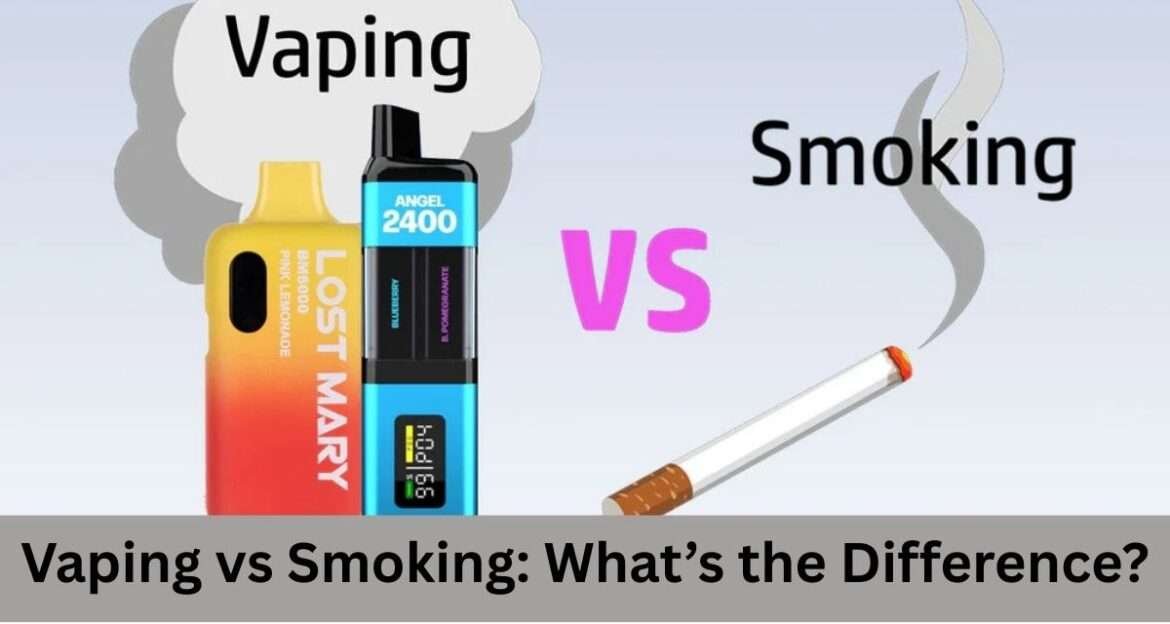
Over the past decade, the way people consume nicotine has expanded beyond traditional cigarettes. Vaping Device has emerged as a modern alternative, often discussed alongside smoking, yet the two experiences are fundamentally different in how they work, how they are used, and how they fit into daily life. While both are intended for adult users and involve nicotine consumption, the methods, sensations, and practical considerations vary significantly. Understanding these differences helps clarify why many adults compare vaping and smoking when deciding which option aligns better with their preferences and lifestyle.
This article provides a detailed, neutral, and informative comparison of vaping versus smoking, focusing on technology, user experience, convenience, sensory differences, and lifestyle impact
1. What Is Smoking?
Smoking traditionally refers to the use of combustible cigarettes, cigars, or other tobacco products that involve burning. When a cigarette is lit, the tobacco and paper burn at high temperatures, producing smoke that is inhaled into the lungs.
Key characteristics of smoking include:
- Tobacco is burned through combustion
- Smoke is created as a byproduct of burning
- A flame is required to ignite the cigarette
- Ash is produced during use
The process of burning defines the entire smoking experience.
2. What Is Vaping?
Vaping uses electronic devices to heat a liquid (commonly called e-liquid or vape juice) until it turns into an aerosol that can be inhaled. Unlike smoking, vaping does not involve burning.
Key features of vaping include:
- Liquid is heated, not burned
- Aerosol is produced instead of smoke
- Devices are powered by rechargeable batteries
- No flame or combustion is involved
This technological difference is the foundation of how vaping differs from smoking.
3. Combustion vs. Heating
The most important distinction between smoking and vaping is combustion versus heating.
Smoking:
- Burns tobacco at very high temperatures
- Produces smoke through combustion
- Creates ash and cigarette butts
Vaping:
- Heats e-liquid to a controlled temperature
- Produces aerosol, not smoke
- Leaves no ash
This difference affects everything from cleanliness to sensory experience.
4. Smoke vs. Aerosol
Smoking produces smoke, which is dense and composed of fine solid particles and gases created by burning materials.
Vaping produces an aerosol, which is formed when liquid is heated and vaporized.
From a practical standpoint:
- Smoke is thick and lingers in the air
- Aerosol is typically lighter and dissipates faster
- Smoke has a stronger presence in indoor spaces
This difference plays a major role in social settings.
5. Odor and Lingering Smell
One of the most noticeable differences between vaping and smoking is odor.
Smoking:
- Produces a strong, recognizable smell
- Odor clings to clothes, hair, and furniture
- Lingering smell remains long after use
Vaping:
- Generally produces milder aromas
- Smell fades more quickly
- Less noticeable on clothing and surroundings
Many users cite reduced odor as a reason for choosing vaping.
6. Ash and Cleanliness
Traditional smoking creates ash as a natural byproduct of combustion.
Ash-related aspects of smoking:
- Requires ashtrays
- Can create mess and residue
- Needs frequent cleaning
Vaping, by contrast:
- Produces no ash
- Leaves no burned residue
- Offers a cleaner overall experience
This makes vaping more convenient in many environments.
7. Device and Accessories
Smoking requires minimal equipment:
- Cigarettes
- A lighter
Vaping involves electronic devices, which may include:
- A battery-powered vape device
- Pods, cartridges, or refillable tanks
- Charging cables
This means vaping has more components but also more technological features.
8. Convenience and Readiness
Smoking is straightforward and requires no preparation beyond lighting a cigarette.
Vaping requires:
- A charged battery
- Occasional refilling or pod replacement
- Basic device maintenance
While vaping introduces some preparation, it also removes the need for lighters or open flames.
9. Sensory Experience
The sensory differences between vaping and smoking are significant.
Smoking:
- Strong throat hit
- Dense smoke
- Familiar tobacco taste
Vaping:
- Smoother inhale for many users
- Adjustable vapor output depending on device
- Wide range of flavor profiles
Taste and sensation preferences vary from person to person.
10. Flavor Variety
Smoking is limited mainly to tobacco flavors with slight variations.
Vaping offers:
- Extensive flavor options
- Consistent taste throughout use
- Ability to switch flavors easily
This variety is a key attraction for many users.
11. Social and Environmental Impact
Smoking has become increasingly restricted in public spaces.
Social considerations for smoking:
- Strong odor can affect bystanders
- Smoke lingers in shared environments
- Often requires stepping outside
Vaping:
- Aerosol dissipates faster
- Generally considered less intrusive
- Sometimes allowed in places where smoking is restricted
However, regulations vary by location.
12. Ritual and Habit
Smoking has a long-established ritual:
- Lighting the cigarette
- Holding it between fingers
- Tapping ash
Vaping introduces a different ritual:
- Activating a device
- Inhaling from a mouthpiece
- Managing battery life
Some users prefer the familiarity of smoking, while others enjoy vaping’s modern feel.
13. Control and Customization
Traditional cigarettes offer little control over the experience.
Vaping devices often allow:
- Control over nicotine strength
- Choice of device type
- Selection of airflow and vapor output
This flexibility allows users to tailor their experience.
14. Cost Structure
The cost experience differs between smoking and vaping.
Smoking:
- Ongoing daily purchase of cigarettes
- Predictable cost per pack
Vaping:
- Initial investment in a device
- Ongoing cost of e-liquid or pods
- Potential long-term cost differences
Cost effectiveness depends heavily on usage habits.
15. Portability
Cigarettes are compact and easy to carry.
Vaping devices vary:
- Small pod systems are highly portable
- Larger devices may be bulkier
- Charging access may be needed
Portability depends on the type of vape used.
16. Learning Curve
Smoking has virtually no learning curve.
Vaping may involve:
- Understanding device operation
- Learning to refill or replace pods
- Adjusting settings on advanced devices
This learning curve can be a barrier or an advantage, depending on the user.
Conclusion
Vaping and smoking differ fundamentally in how nicotine is delivered through heating liquid versus burning tobacco. This core difference influences smoke versus aerosol production, odor, cleanliness, convenience, and overall user experience.
Smoking is simple, familiar, and ritual-based, but it produces smoke, ash, and strong lingering odors. Vaping introduces technology, customization, and variety, producing aerosol instead of smoke and offering a cleaner, more adaptable experience for many users.


